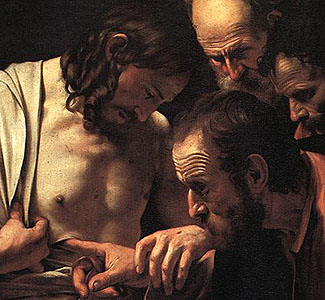
 Doubt is a legitimate part of an individual’s relationship with God. It causes us to question our faith. When we find the adequate answer to a difficult question about God, our faith is strengthened and a bout of doubt proves beneficial to our spiritual development. Doubt comes from the mind’s desire for truth. It can be healthy. But when our doubt continues to linger after we’ve been given reasonable answers, does it mean the evidence presented wasn’t good enough? Nope. Sometimes doubt is the product of stupidity. Think about the nature of our questioning. We ask questions of an infinite God who is beyond us (transcendent) and not fully comprehensible to the human mind. To describe God in stupid terms: He can do things we can’t. So just because we can’t always explain Him, should we have reason to doubt?
We are intelligent beings, some of us more than others. But I think it’s important for us to recognize our limitations. Comparatively, God is smarter than us. He can do things we can’t. Because of this, I think there will always be a side of Him that is mysterious to us. However, because God knows we don’t like mystery, He makes sure that we know as much about Him as is humanly possible. We can know God completely, from a human perspective. We can’t know God completely from God’s perspective. I’m content with this. There is still a lot to learn about God from a human perspective. This learning ability (called reason) gives me a profoundly deep faith. There is nothing stupid about a guy traveling through the highs and lows of faith and reason. But if I refuse to believe something about God simply because it falls outside of my rational human capacity, then you can just call me stupid.
I think the ancient church Bishop, Hilary of Poitiers understood this concept:
“The Lord stoops to the level even of our feeble understanding. He works a miracle of his invisible power in order to satisfy the doubts of unbelieving minds. Explain, my critic, the ways of heaven – explain his action if you can. The disciples were in a closed room. They had met and held their assembly in secret since the passion of the Lord. The Lord presents himself to strengthen the faith of Thomas by meeting his challenge. He gives him his body to feel, his woulds to handle…Yet where does the one who is standing in their midst come from? Your senses and your words are powerless to account for it. The fact is certain, but it lies beyond the region of human explanation. If, as you say, our account of the divine birth is a lie, then prove that this account of the Lord’s entrance is a fiction. If we assume that an event did not happen because we cannot discover how it was done, we make the limits of our understanding into the limits of reality. But the certainty of the evidence proves the falsehood of our contradiction. The Lord did stand in a closed house in the midst of the disciples; the Son was born of the Father. Deny not that he stood, because your puny wits cannot ascertain how he came there; renounce instead a disbelief in God the only begotten and perfect Son of God the unbegotten and perfect Father that is based only on the incapacity of sense and speech to comprehend.” (On the Trinity, 3.20)
 Daniel Flores Jr.
LOVE this post. Thanks for the reminder.